Ghost Boards and Broken Links: Tracing the Ruins of Forums We Used to Call Home
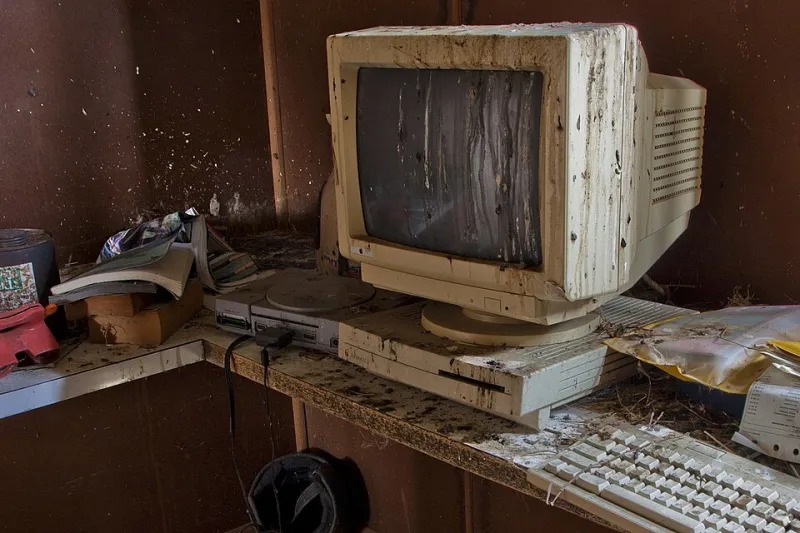
Photo: Steve Parker, CC BY 3.0, via Wikimedia Commons
If you've been online long enough, you know the particular sting of typing a familiar URL and hitting a blank page. Or worse—landing on a domain parking site full of ads where your old forum used to live. The threads are gone. The usernames you knew like neighbors have scattered. Whatever was built there over years of conversation exists now only in screenshots someone thought to save and the vague nostalgia of people who were there.
This happens more than most people realize, and it happens to good communities—not just the forgotten ones.
Every Forum Has a Lifecycle
Online communities aren't static things. They move through recognizable phases whether their founders intend it or not. There's the scrappy early period where a small group of passionate people build something from scratch, the growth phase where new members pour in and the culture starts to calcify into norms, the plateau where things feel established and maybe a little comfortable, and then—for many forums—the long decline that nobody wants to name out loud.
Decline doesn't always look dramatic. Sometimes it's just a little quieter each month. The regulars post less. New registrations slow down. Threads that would have sparked a hundred replies five years ago get three responses and fade. By the time anyone says anything about it, the momentum is already gone.
Forum founders who've lived through this describe it with a kind of helpless clarity. "I watched it happen in slow motion," said one former admin of a now-defunct TV fan community that once had tens of thousands of active members. "The show ended, and I kept thinking people would stick around to talk about other stuff. Some did. But the thing that brought everyone together was gone, and nothing replaced it."
The Causes Are Usually Mundane
It's tempting to blame big social platforms for killing forums, and there's truth in that narrative—Facebook groups, Reddit, Discord, and Twitter all siphoned communities away from independent boards at various points over the past fifteen years. But platform competition is rarely the whole story.
The more common culprits are quieter and harder to fix.
Founder burnout. Running a forum is a volunteer job with real responsibilities and no guaranteed rewards. When the person who built the place gets tired, moves on, or just has less time, the community often doesn't have infrastructure to survive their absence. If the admin is also the only person with server access, payment info for hosting, and the institutional memory of why the rules are the way they are—when they disappear, so does everything else.
The succession problem. Most forums never develop a genuine succession plan. The idea that someone else might need to take over feels abstract until it's urgent. By then, the transition is messy, contested, or simply doesn't happen. Communities that do survive long-term tend to have distributed leadership and documented processes—not just one person holding everything together with goodwill and free time.
Platform migrations gone sideways. Moving a forum to new software or a new host is one of the most reliably destructive events in a community's life. Members get lost in the shuffle. Old posts don't transfer cleanly. The URL changes and search traffic disappears. People who were on the fence about staying use the chaos as a reason to leave. Done poorly, a migration can cut a community's active membership in half overnight.
Topic exhaustion. Some forums are built around something finite—a TV show, a game, a product line, a moment in culture. When that thing ends or fades, the community's reason for existing goes with it. The forums that survive this are the ones that successfully pivot their identity from "fans of X" to something broader, which is a genuinely difficult cultural shift to pull off.
What Gets Lost When a Forum Dies
This is the part that doesn't get talked about enough. When a forum goes dark, it's not just the community that disappears—it's years of accumulated knowledge, solved problems, creative work, and human connection that existed nowhere else.
A forum dedicated to a specific model of vintage synthesizer might have the only surviving documentation of a particular repair process. A parenting board from the early 2000s might hold thousands of conversations that helped real people through real crises. A local community forum might be the only record of neighborhood history that never made it into any official archive.
The Wayback Machine catches some of it. Dedicated users save screenshots. But most of it just vanishes, and the people who needed it don't find out until they go looking years later and get a 404 error.
Lessons the Ruins Are Still Teaching
For anyone running a forum today, the history of dead communities is genuinely instructive—not in a morbid way, but in the way that knowing what goes wrong helps you build things that last.
Distribute your leadership before you need to. Get other people invested in the community's survival, not just its content. Document your processes somewhere accessible. Pay attention to the early signs of decline—they're usually visible months before they become irreversible.
And think seriously about what your forum is for beyond its primary topic. The communities that outlast their original context are the ones where people showed up for the subject but stayed for each other. That social layer is what actually holds a community together when everything else shifts.
There's also a harder question worth sitting with: sometimes a forum has simply run its course, and the kindest thing is to wind it down intentionally rather than let it rot slowly. Archive the content. Send members somewhere else. Close the doors cleanly. Not every ending has to be a ghost story.
But for the ones worth saving—and plenty of them are—the work of sustainability starts now, not when things get quiet. The boards that are still buzzing twenty years from now will be the ones where somebody thought ahead.